
Neurofeedback for Test Anxiety in Los Angeles & Pasadena
Test anxiety can turn months of hard work into a blur on exam day. Even when you have studied and you know the material, the brain can flood with stress, leaving your heart racing, your thoughts scattered, and your mind going blank right when you need it most.
At Vital Brain Health, we help students, teens, and adults who freeze up under pressure. Our drug-free, brain-based approach gives your nervous system a way to settle so you can stay focused and recall what you have learned.
We create a calm, supportive space where steadier focus feels within reach. Schedule an appointment today and take the first step toward calmer test days.
At a Glance
Neurofeedback is a drug-free, non-invasive brain training. At Vital Brain Health in Los Angeles and Pasadena, qEEG brain mapping guides real-time feedback that helps the brain networks behind worry and stress settle, so students facing test anxiety can stay calmer, recall what they studied, and focus under pressure, without medication.
What is Test Anxiety?
Test anxiety is the intense fear and physical stress response that builds before or during exams. It can block recall and focus even when a student is well prepared, so the brain's threat system overrides the very memory and concentration needed to perform.
At Vital Brain Health, we focus on the brain patterns underneath those reactions. By helping the regions that drive the stress response learn to calm and coordinate, we support steadier focus and clearer thinking under pressure, without medication.
Schedule an appointment with Vital Brain Health today and let our team help you face your next exam with more confidence.
Common Risk Factors for Test Anxiety
Anyone can experience test anxiety, but some circumstances make it more likely. Risk factors associated with test anxiety include:
High-Stakes Exams
Major exams that carry real consequences, such as finals, board exams, or college entrance tests, raise the pressure and can trigger a stronger stress response.
Perfectionism and Fear of Failure
Holding yourself to impossibly high standards and dreading any mistake can keep the brain locked in worry instead of focused on the task.
Past Negative Test Experiences
A history of blanking out or doing poorly on tests can teach the brain to brace for the same outcome, fueling anxiety before the next exam.
Underlying Anxiety
People who already live with general anxiety or worry often find that exams amplify those feelings into a stronger test-time reaction.
Poor Sleep and Preparation
Cramming, lost sleep, and last-minute studying leave the brain depleted, which makes it harder to stay calm and recall information under pressure.
Key takeaway
Test anxiety is not a sign that you are unprepared or incapable. Drug-free, qEEG-guided neurofeedback helps your brain learn to stay calm and focused under pressure, so you can show what you actually know on exam day, in our Pasadena office or remotely.
What symptoms are associated with test anxiety?
Test anxiety symptoms can vary in type and severity. Some of the symptoms that benefit from an evaluation at Vital Brain Health include:
If exam-day panic sounds familiar, our clinicians break down why students freeze on exams and how neurofeedback helps, from the brain patterns behind the blank-out to what training actually changes.
Parents of younger test-takers may also want to read our honest look at whether neurofeedback helps a child with anxiety before booking an evaluation.
What are the Support Options for Test Anxiety?
Vital Brain Health offers different types of support, each serving a different purpose. Some of the support you may be recommended include:
Neurofeedback
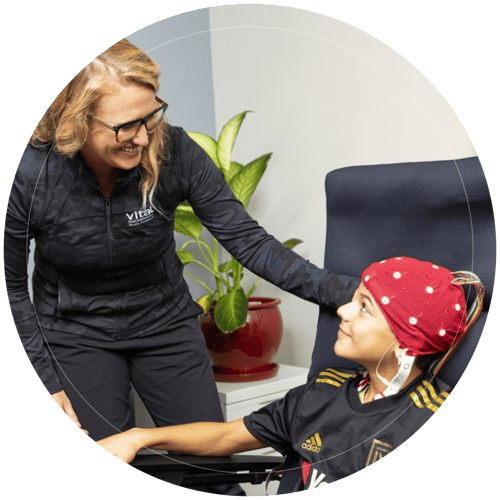
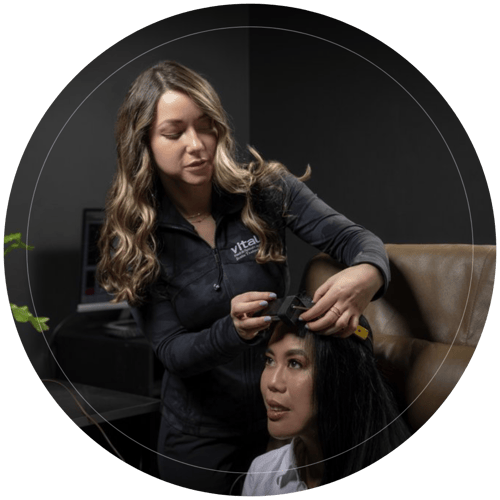
Neurofeedback uses real-time feedback to help the brain networks behind worry and overarousal learn calmer, more balanced patterns. For test anxiety, this can support steadier focus, clearer recall, and a greater sense of control under pressure, all without medication.
Biofeedback
Biofeedback teaches you to recognize and calm the physical stress responses an exam can trigger, like a racing heart or shallow breathing, giving you practical tools to steady yourself before and during a test.
Frequently Asked Questions
With test anxiety, the brain often shifts into a stress state the moment an exam approaches, crowding out the focus and recall you need. Neurofeedback uses qEEG-guided, real-time feedback to reward calmer, more regulated brain activity, helping the networks that drive worry and overarousal learn to settle. Over a series of sessions, many people notice steadier concentration, clearer recall, and a calmer feeling going into tests. We build every plan on your own brain map rather than a one-size-fits-all protocol.
Yes. Neurofeedback is drug-free and non-invasive. There are no medications and no surgery, you simply relax while sensors read your brain activity and the system guides it toward healthier patterns. It can be used on its own or alongside the academic support and study strategies you may already be using.
We do. We support students, teens, and adults preparing for exams of every kind, from school tests to college entrance and professional board exams. Care is available in our Pasadena office and through remote programs, so you can train from wherever you feel most comfortable.
Training is individualized, so there is no fixed number. Your plan is built from your qEEG brain map, and many training plans run in the range of 30 to 40 sessions over several months. The exact recommendation comes from your initial evaluation, where we review your brain map, your goals, and your exam timeline together.
Before any training begins, qEEG brain mapping creates a 3D picture of how your brain is functioning and shows which networks are over- or under-active. That map lets us target the specific patterns behind your test anxiety, so the training is designed for this brain, not a generic protocol.
Coverage varies by plan, and many plans treat neurofeedback as an elective service. Our team can discuss your options and any documentation you may need at your consultation, so you know exactly where you stand before you begin.
Hammond, D. Corydon. "Neurofeedback Treatment of Depression and Anxiety." Journal of Adult Development, vol. 12, no. 2-3, 2005, pp. 131-137. Micoulaud-Franchi, Jean-Arthur, et al. "EEG Neurofeedback for Anxiety Disorders and Post-Traumatic Stress Disorders: A Blueprint for a Promising Brain-Based Therapy." Current Psychiatry Reports, vol. 23, no. 12, 2021, pp. 1-15. Rasey, Howard W., et al. "EEG Biofeedback for the Enhancement of Attentional Processing in Normal College Students." Journal of Neurotherapy, vol. 1, no. 3, 1996, pp. 15-21. Ros, Tomas, et al. "Consensus on the Reporting and Experimental Design of Clinical and Cognitive-Behavioural Neurofeedback Studies (CRED-nf Checklist)." Brain, vol. 143, no. 6, 2020, pp. 1674-1685.

Get the Neurofeedback You Need
Whether you're in the Los Angeles area or elsewhere in the United States, we can provide you the services you need.

Reach Out To Us
Professional Certifications